Environmental Impact Analysis of Mechanical Systems and the Related Design Choices.
Sustainability teaching in engineering is usually checked with self-report surveys. These measure what students know about sustainability, not whether they actually design with it in mind. This study tested a measurable, embedded design constraint instead: a 2.5 W steady-state power budget added to a project-based mechanical design course. The hypothesis was that the cap would push students towards lighter systems, which need less energy to keep moving, and so lower the environmental impact (EI) of materials and moving components, with a statistically significant difference from an unconstrained baseline semester. The result went against the hypothesis. Total EI did not differ significantly between semesters, which suggests most projects already drew less than 2.5 W.
Reports
Highlights
Methodology.
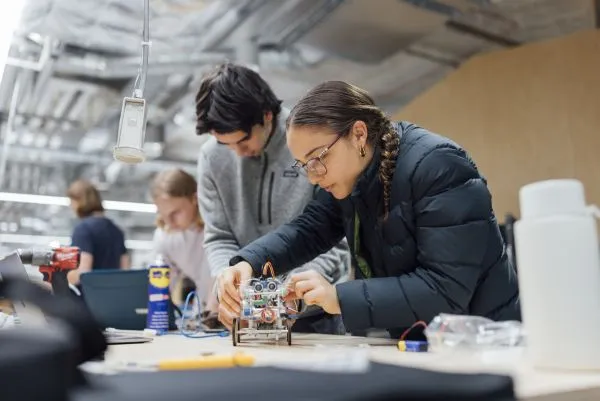
The study used the University of Melbourne’s Mechanical Systems Design course. Teams of 2–3, mostly third-year undergraduates, designed and built a semi-autonomous amusement park ride for two Lego figurines. Each ride combined mechanical motion transfer, electronic safety features and Arduino-based control, and was built in a makerspace with laser cutters and 3D printers. Semester 1 had no power constraint and served as the baseline. Semester 2 kept the same course but added the power budget. The 2.5 W limit came from the maximum output of a 5 V, 500 mA USB-powered Arduino. Projects powered only over USB were assumed to comply, and projects with external supplies were judged qualitatively. Project EI is the total sum of element scores.
Data Analysis.
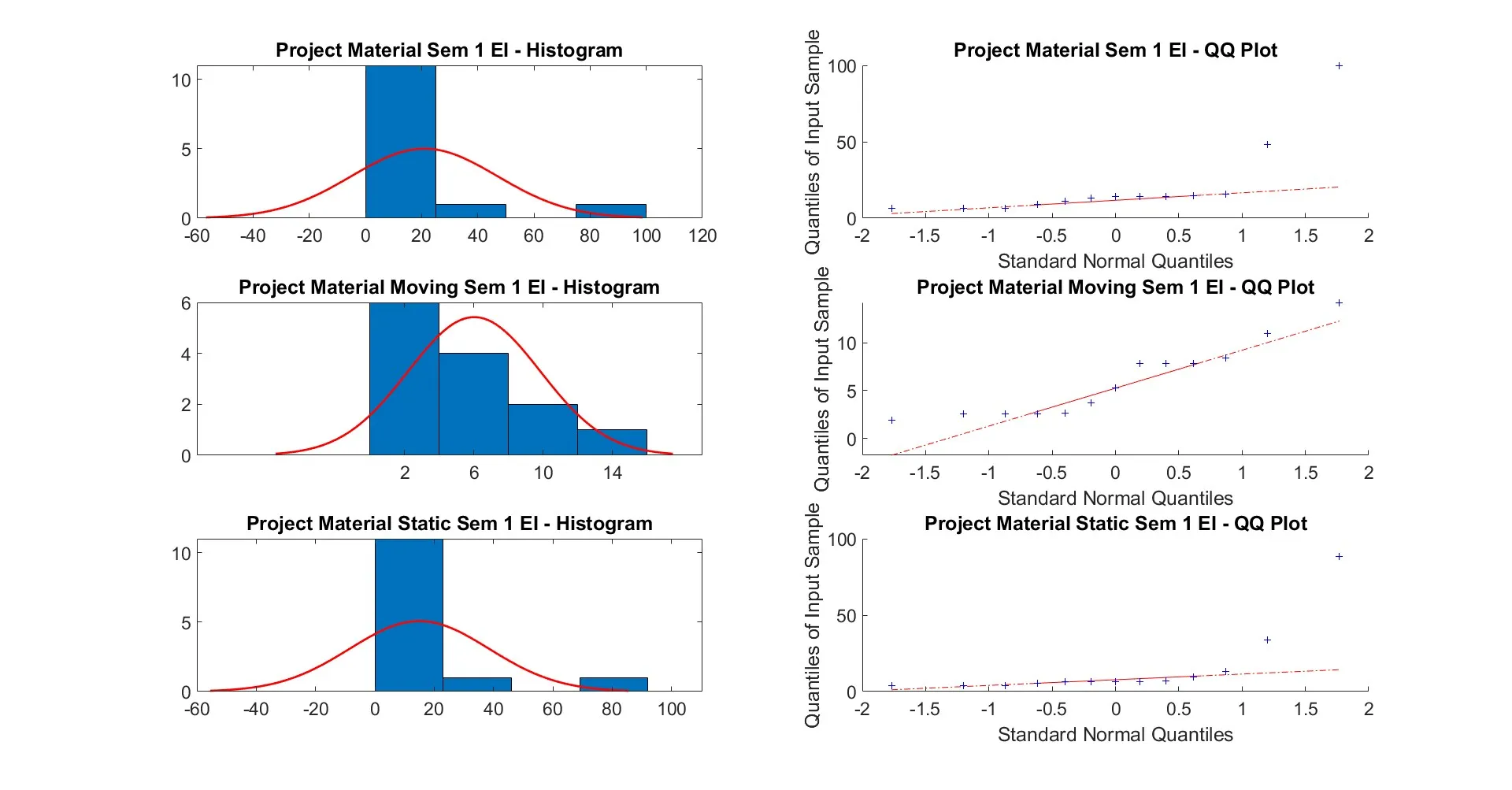
Shapiro–Wilk tests, supported by histograms and Q–Q plots, showed that most EI distributions were right-skewed and not normal. Semester-to-semester comparisons therefore used the Mann–Whitney U test, with Welch t-tests only for the normally distributed MDF and steel shares of moving material. None of the comparisons between semesters reached significance. This held for total, moving and static EI, for both materials and components.
Findings.
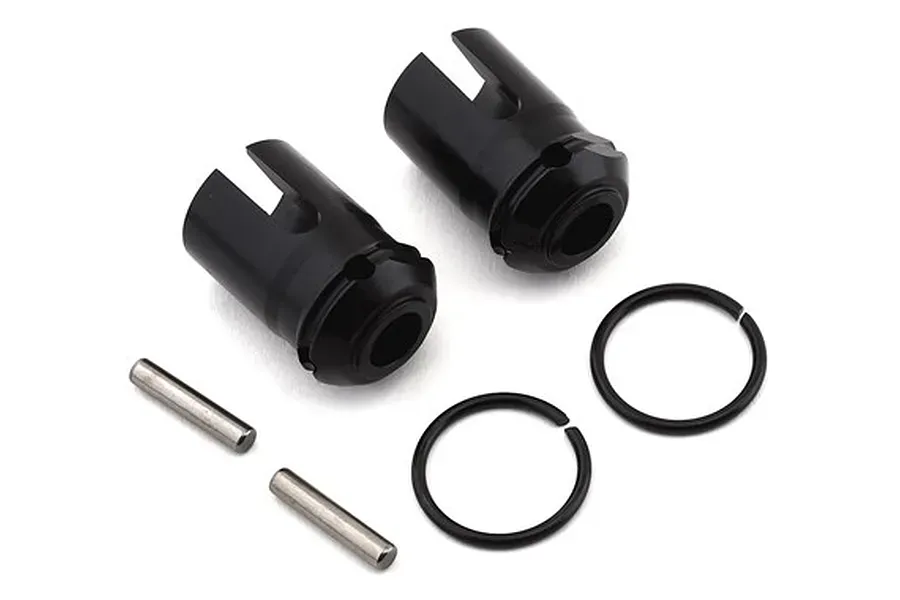
The null result most likely means the 2.5 W threshold was not binding for this kind of design. A cap set at or above typical consumption cannot drive further weight reduction. What it did instead was change the design: lighter laser-cut materials and more mechanical transmission. At the same time, convenience and staff encouragement pushed students towards high-EI standardised parts (steel shafts and adaptors), which offset any gains. A qualitative review of team reports showed a gap between the constraint and how students saw their priorities. Teams rarely cited the power budget. Those that did often counted only power for motion and left out the electronics, and very few measured steady-state draw. Their EI justifications were often vague. Several limits weaken the conclusions: unequal and small samples; reused parts were left out of EI, even though teams named reuse as their main sustainability strategy; adhesives and items such as string could not be scored properly; and changes between cohorts and in teaching could also explain the results.